
Short-Term vs Long-Term Rentals Near Canby: What to Consider Before You Buy
Short-Term vs Long-Term Rentals Near Canby: What to Consider Before You Buy
If you're looking at investment property near Canby and trying to decide between running a short-term rental or finding a long-term tenant, the answer isn't as simple as "Airbnb pays more." It depends on the property, the location within Clackamas County, your tolerance for hands-on management, and what the regulations actually allow. Here's a practical breakdown of both strategies so you can make that decision with clear eyes.
What "Short-Term" and "Long-Term" Actually Mean in This Context
A short-term rental (STR) is any rental for fewer than 30 consecutive days — your typical Airbnb or VRBO listing. A long-term rental is a traditional lease, usually 6 to 12 months or longer. There's also a mid-term middle ground (30–90 days) growing in appeal, but for this post, we're focused on the two main strategies.
The distinction matters because STRs and long-term rentals are governed by completely different rules, require different management approaches, and attract different tenant pools. A property that works smoothly as a long-term rental might be a compliance headache as a short-term one — or vice versa.
The Regulatory Reality for Short-Term Rentals in Clackamas County
This is where a lot of prospective investors get caught off guard. If your investment property is in an unincorporated area of Clackamas County — meaning outside city limits — Clackamas County implemented a comprehensive STR ordinance in December 2023 that is actively enforced.
Under those regulations, every short-term rental must be registered with the county before it can be advertised anywhere. Registration requires certifying that the property meets building and fire safety standards (smoke/CO detectors, fire extinguisher, proper egress), carrying liability insurance, and including your county-issued STR registration number on every platform listing. You cannot legally list on Airbnb or VRBO without that number. The county's STR pilot program has been extended through at least June 2026 as they continue to refine the rules.
There are also operational requirements that matter at the property level. Maximum occupancy is capped at 15 people. You need one off-street parking space per sleeping area — a requirement that trips up some smaller properties. Quiet hours run 10pm to 7am, and a responsible party must be available to respond to complaints within two hours at all times. Fail to comply, and fines can reach $7,500 per violation, with the county reserving the right to revoke your registration entirely.
One important note: these regulations apply specifically to unincorporated Clackamas County. If the property sits inside Canby city limits, you're operating under Canby's municipal rules, not the county ordinance — and you'll want to verify the current city code before you list anything. The key takeaway is that "just outside Canby" and "inside Canby" are two different regulatory environments. Know exactly where your property falls before you buy with STR intent.
The Financial Picture: Income Potential vs. Actual Net Return
Short-term rentals have a well-earned reputation for higher gross income. Oregon coastal markets show this vividly — Bandon and Depoe Bay are producing average annual revenues of $69,000–$91,000 per property at gross yields of 8–12%, according to data from Lofty's 2025 Oregon STR market report. Even inland markets like McMinnville, closer in geography to the Canby area, are showing 8.3% gross yields.
But gross yield isn't net yield. STR operating expenses typically run 40–50% of gross income — compared to roughly 35% for long-term rentals — once you account for platform fees (Airbnb charges hosts around 3%), professional cleaning between every stay, furnished furnishings that wear out faster than you'd expect, and property management if you aren't doing it yourself. If you hire a full-service STR manager, their cut often runs 20–40% of revenue on top of everything else.
Long-term rentals generate less per month but require dramatically less ongoing effort. In Canby, rental data shows average rents sitting in the $1,500–$1,900 range depending on bedroom count and property type. Market data from late 2025 puts a one-bedroom around $1,418–$1,634 and a three-bedroom in the $1,821–$1,941 range. Long-term management fees are substantially lower — typically 8–12% of monthly rent — and you're not handling turnover every few days.
The honest comparison: a well-managed STR might gross 30–50% more annually than the same property on a long-term lease, but once you factor in higher expenses, seasonal vacancy, active management costs, and compliance overhead, the net advantage often narrows significantly. For some investors, the juice is worth the squeeze. For others, it isn't.
What This Looks Like in Practice Near Canby
The Canby area has characteristics that shape how each strategy performs. This isn't a coastal resort town with a built-in tourism pipeline — there's no Timberline Lodge, no beachfront, no annual festival drawing 50,000 visitors. That matters for STR demand. Travelers booking Airbnbs in Oregon generally gravitate toward the coast, Mt. Hood, and wine country. Canby and the immediate South Clackamas area are not on that primary STR radar.
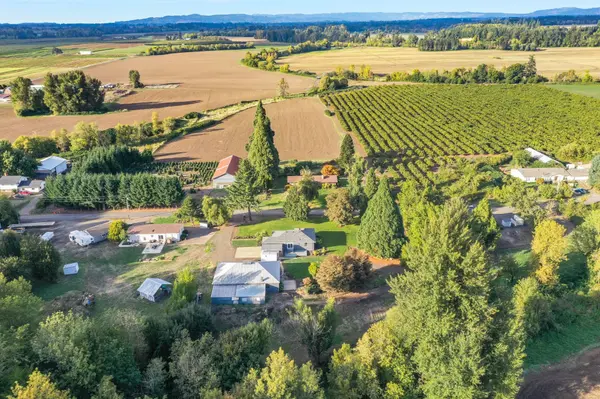
That said, the area does have proximity to the Portland metro, agricultural tourism (pumpkin patches, nurseries, the Canby Ferry), and a growing population of remote workers and relocating households who may need mid-term accommodations during transitions. A property with distinct rural character — acreage, a view, a hot tub — can carve out a niche. A standard subdivision home, not so much.
Long-term rentals, by contrast, are structurally well-suited to Canby's market fundamentals. The Redfin March 2026 median sale price for Canby was $546,000, and Altos Research currently shows a median list price around $689,900 with 115–120 average days on market. That combination of purchase prices and current rental rates means a cash-flow analysis requires precision — at $546K purchase with 20% down, you're looking at a mortgage around $2,700–$2,900/month at current rates before taxes, insurance, and maintenance. At $1,900 in monthly rent, straight cash flow is challenging without meaningful down payment. The play for most long-term investors in this range is a combination of modest cash flow, mortgage paydown, and appreciation over time — not a high monthly spread.
Oregon Tax Implications You Need to Know
STR income and long-term rental income are taxed differently, and it's a material difference. Long-term rental income is passive income, reported on Schedule E, with standard deductions for mortgage interest, repairs, insurance, and depreciation. No transient lodging taxes apply.
Short-term rentals trigger transient lodging taxes. In unincorporated Clackamas County, that's a 6% county TLT plus a 0.85% STR user fee on all rental income — and Oregon's state lodging tax adds another 1.5%. That 8.35% combined rate comes off the top before you calculate anything else. STR income can also be treated as active or business income depending on your level of involvement, which affects self-employment tax exposure. Starting in 2025, Airbnb and VRBO are issuing 1099-K forms to any host earning more than $600 annually — so every dollar is on the IRS's radar.
This isn't a reason to avoid STRs, but it is a reason to run your numbers with an accountant who actually understands rental property taxation, not just a general tax preparer. The structure of your ownership entity, your hours of material participation, and your depreciation strategy all have real financial consequences.
What This Means for You
If you're an investor eyeing a property near Canby with STR intent, the first step is verifying whether the property is inside city limits or in unincorporated Clackamas County — and then confirming exactly what the current regulations allow. Do not assume a listing will be allowed just because neighbors are running one. Rules have changed significantly since 2023, and they're continuing to evolve.
If the numbers still work after factoring in compliance, taxes, occupancy seasonality, and active management costs, short-term can be a solid strategy — particularly for distinctive rural properties with unique appeal. If you're looking for straightforward, lower-maintenance income and a property that finances cleanly, long-term is the more reliable path in this market at current price levels.
Either way, get the full picture before you buy. The investment strategy should drive the property search — not the other way around.
Jennifer Schurter serves buyers, sellers, and investors throughout South Clackamas County and the North Willamette Valley — including Canby, Oregon City, Wilsonville, Aurora, Hubbard, Molalla, Woodburn, Newberg, Sherwood, Tualatin, West Linn, Lake Oswego, and the greater Portland metro south. Her goal is simple: to be the most knowledgeable, most responsive, and most genuinely helpful real estate agent in the area — every single time. Jennifer is a licensed Oregon real estate broker with Real Broker LLC.
Ready to talk through your next move? Schedule a time with Jennifer here: https://calendly.com/jen-475/
Categories
Recent Posts







“I see my job as a Real Estate Advisor is to educate consumers about the realities of the Real Estate market of today. If you're ready to learn more about what it could mean for you to buy, sell, or invest in Real Estate, let's connect!"