
How Much Are Closing Costs for Buyers in Oregon?
How Much Are Closing Costs for Buyers in Oregon?
Plan on 2% to 5% of the purchase price. On most Oregon transactions, buyers land somewhere around 2.83% — which on a $546,000 home in Canby works out to roughly $15,000 on top of your down payment. That number can feel like a surprise if you weren't expecting it. This breakdown explains exactly what you're paying for, who pays what under Oregon custom, and what changes depending on your loan type.

What Counts as a Closing Cost (and What Doesn't)
Closing costs are the fees tied to the transaction itself — the work done to process your mortgage, verify the property, transfer title, and legally record the sale. They fall into two distinct buckets that most buyers blur together.
Fees are one-time charges for services performed: lender origination, appraisal, title search, title insurance, escrow, recording. You pay once and they're done.
Prepaids are deposits into your escrow account that fund upcoming obligations — your homeowners insurance (typically 12 months paid upfront), property tax reserves (usually 2–3 months), and prepaid mortgage interest from your closing date through the end of that calendar month. These aren't "extra" costs you're losing — they're money going into an account that's yours — but they do increase how much cash you need at the table.
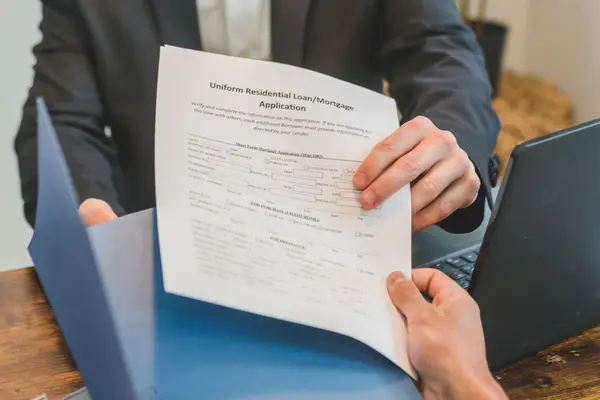
Your lender is legally required to send you a Loan Estimate within three business days of receiving your application. That document spells out every expected cost in standardized format, so you can compare lenders on equal footing. Read it carefully before moving forward.
The Line-By-Line Breakdown
Here's where buyer closing costs typically land in Oregon, based on data from Rocket Mortgage and iBuyer.com for Oregon-specific transactions:
Lender fees — $2,000 to $4,500 This includes origination, underwriting, processing, and credit report fees. The range is wide because it varies significantly by lender and loan program. Shopping two or three lenders — and comparing their Loan Estimates — is one of the most reliable ways to control this cost.
Appraisal — $650 to $850 Your lender requires an independent appraisal to confirm the home is worth what you're paying. This is ordered early in the process and sometimes paid before closing rather than at the table.
Title insurance and escrow — $2,500 to $4,500 This covers the title search (confirming the seller has clear ownership, no unknown liens), the lender's title insurance policy (which protects your lender), and the escrow/settlement fee. Oregon practice is for the buyer to pay the lender's title policy; the seller traditionally pays the owner's title policy that protects you as the new owner. Escrow fees in Oregon are typically split 50/50 between buyer and seller, according to Lawyers Title of Oregon.
Oregon has no statewide real estate transfer tax — unlike Washington state, which has an excise tax of 1.6%–3.5%. That's a meaningful advantage for buyers here.
Prepaid items — $2,500 to $4,000 Expect to prepay 12 months of homeowners insurance, 2–3 months of property taxes into escrow, and interest from your closing date through the end of the month. Closing earlier in the month means more prepaid interest; closing at the end of the month means less.
Recording fees — $150 to $300 County recording charges for your new deed and loan documents. These vary slightly by county and document count but are not a major line item.
Total estimate on a $546,000 home: roughly $13,000–$18,000, depending on your lender, loan type, and closing date. That's before your down payment.
What the Buyer Pays — and What the Seller Pays
Oregon has well-established customs around who pays what, though every transaction is negotiable.
Buyers typically pay: lender origination and underwriting fees, the appraisal, the lender's title insurance policy, half the escrow fee, prepaid homeowners insurance, property tax reserves, prepaid mortgage interest, and recording charges for the new deed and loan documents.
Sellers typically pay: the owner's title insurance policy, their share of the escrow fee, prorated property taxes through the date of transfer, and real estate commissions.
In a buyer's market, it's common to negotiate seller concessions toward closing costs. A seller might agree to credit you $8,000 at the table while the purchase price stays where it is — effectively reducing your out-of-pocket without changing the sale terms. In a tighter market, that ask carries more risk. Your agent can tell you what's realistic given current inventory and offer activity.
How Your Loan Type Changes the Numbers
Loan type is one of the biggest variables in your actual closing cost total, and it's worth understanding before you commit to a program.
Conventional loans have no government-mandated upfront fees. Buyers putting less than 20% down will pay private mortgage insurance (PMI) monthly but don't face an upfront MIP charge.
FHA loans require an upfront mortgage insurance premium of 1.75% of the loan amount — paid at closing or rolled in. On a $500,000 purchase with 3.5% down, that's roughly $8,450 added to your costs, plus ongoing monthly MIP. More lenient on credit and debt-to-income, which is why they remain popular with first-time buyers.
VA loans eliminate most lender fees for eligible veterans and service members. No PMI, no upfront MIP. The VA funding fee (1.25%–3.3%) can be rolled into the loan, making VA loans the lowest out-of-pocket option for those who qualify.
USDA loans, available for rural-eligible properties in parts of the communities surrounding Canby, carry a 1% upfront guarantee fee but require no down payment — which shifts the cash-to-close math significantly.
The right program depends on your situation, credit, and the property — not just the rate. A lender who explains all four options is worth more than one who defaults to what they originate most.
What This Looks Like in Canby and the Surrounding Area
Canby's median sale price hit $546,000 in March 2026, up 7.3% year over year, according to Redfin data. At 2.83%, closing costs on a median-priced Canby home run roughly $15,400 — before your down payment.
Put that in concrete terms: a buyer using a conventional loan with 5% down on a $546,000 home needs to show up to the table with approximately $27,300 for the down payment plus $13,000–$18,000 in closing costs. Total cash needed: roughly $40,000 to $45,000. That's real money, and it catches people off guard when they've been focused on the monthly payment.
For reference, the Oregon statewide median sat at $508,323 in April 2026 (Redfin data), putting typical closing costs at around $14,400 statewide. Canby's higher median means closing costs land slightly above that.
One thing that helps buyers in this area: Oregon has no statewide transfer tax. Some Washington state buyers crossing the river are genuinely shocked when they realize they don't owe a percentage of the sale price just for the privilege of recording a deed. That savings stays in your pocket.
If you're buying in areas like West Linn or Wilsonville where prices run higher, your total cash-to-close goes up proportionally. This is worth mapping out early — before you start touring homes — so you know your real number.
What This Means for You
Get your Loan Estimate before you tour homes. You'll see exactly what your lender is charging, you can compare at least two estimates side by side, and you'll know your real cash-to-close number — not a guess from a mortgage calculator that omits prepaids.
Closing costs are negotiable — sort of. You can't negotiate lender fees down the way you'd negotiate a car price, but you can shop lenders and find meaningful differences in origination charges. On the seller side, you can negotiate credits toward your costs depending on market conditions.
Don't confuse closing costs with down payment. They're separate. Your lender combines them into a "cash to close" figure, but understanding what's what helps you plan — and helps you catch errors on your Closing Disclosure.
Ask about discount points only when the math works. Paying points to buy down your rate costs money upfront for a lower monthly payment. That trade-off only makes sense if you keep the loan long enough to recoup the upfront cost. Run the break-even before agreeing to any points.
Closing date affects prepaids. A closing on the 28th costs less in prepaid interest than one on the 2nd. Worth knowing when you're scheduling.
Jennifer Schurter serves buyers, sellers, and investors throughout South Clackamas County and the North Willamette Valley — including Canby, Oregon City, Wilsonville, Aurora, Hubbard, Molalla, Woodburn, Newberg, Sherwood, Tualatin, West Linn, Lake Oswego, and the greater Portland metro south. Her goal is simple: to be the most knowledgeable, most responsive, and most genuinely helpful real estate agent in the area — every single time. Jennifer is a licensed Oregon real estate broker with Real Broker LLC.
Ready to talk through your next move? Schedule a time with Jennifer here. No pressure, no pitch — just a real conversation.
Categories
Recent Posts







“I see my job as a Real Estate Advisor is to educate consumers about the realities of the Real Estate market of today. If you're ready to learn more about what it could mean for you to buy, sell, or invest in Real Estate, let's connect!"