
Can I Ask for Seller-Paid Closing Costs in Today's Oregon Market?
Can I Ask for Seller-Paid Closing Costs in Today's Oregon Market?
Yes — and in much of Oregon right now, asking is not only reasonable, it's expected.
Seller-paid closing costs (often called seller concessions or seller credits) are one of the most useful tools available to buyers today. They let a seller cover some or all of your closing costs as part of the purchase agreement, which means less money out of your pocket at closing. Whether you're a first-time buyer managing a tight budget or a move-up buyer who wants to preserve cash, understanding how this works — and when to ask — can meaningfully change what buying a home costs you upfront.
Here's the practical breakdown.

What Are Seller Concessions, Exactly?
A seller concession is any contribution a seller makes that reduces your total cost to purchase the home. That can take a few different forms:
Closing cost assistance is the most common. The seller credits you money at closing, which your lender applies to your closing costs — lender fees, title and escrow charges, prepaids, and so on. You bring less cash to the table.
Mortgage rate buydowns have become increasingly popular as mortgage rates have remained elevated. Instead of covering closing costs, the seller funds a temporary or permanent rate buydown — paying points to reduce your interest rate for the first year or two of the loan, or for the full term. A 1% buydown on a 30-year $450,000 loan can save a buyer several hundred dollars per month at the start.
Repair credits are another form. Rather than fixing something that came up in inspection, the seller credits you the estimated cost at closing and you handle the repair yourself after moving in. This is technically a concession even if it's not labeled as one.
The distinction that matters: a seller concession is different from a price reduction. A price drop lowers what the home appraises and comps against. A credit at closing is a separate line item in the transaction — it comes out of the seller's proceeds and goes toward your costs.
The Oregon Market Right Now: More Leverage Than You'd Think
Here's the honest picture: Oregon buyers have more negotiating room today than they've had in several years.
According to Redfin data, 63.9% of home sales in the Portland metro involved a seller concession in Q1 2025 — the second-highest rate of any major metro in the country, up 14.2 percentage points from the year before. Nationally, Redfin found that 44.4% of sellers gave concessions in Q1 2025, up from 39.3% a year earlier. Portland is running well above the national average.
Active inventory in Oregon is up more than 30% above its long-term average, according to HomeStats data from June 2026. More supply means sellers are competing for buyers, not the other way around. Days on market statewide are averaging 42 days per Redfin's April 2026 data, and roughly one-third of Oregon listings have seen a price reduction. That's a market where sellers are motivated.
In the South Clackamas County and Willamette Valley markets where Jennifer works, this pattern holds. Buyers who understand the current conditions — and have a skilled agent running the numbers — are asking for and receiving meaningful concessions. Listing agents in the Portland metro report seeing concession requests in the $14,000 to $25,000+ range in recent transactions, covering a combination of closing costs and rate buydowns.
None of this means every seller is eager to hand over $20,000. How much you can reasonably ask for depends on the specific property, how long it's been sitting, the seller's situation, and how your offer is otherwise structured. But the idea that asking for help with closing costs is somehow aggressive or unusual? That's no longer accurate in this market.
How Much Can You Actually Ask For?
Here's where your loan type matters a lot — because there are federal caps on how much a seller can contribute to a buyer's costs, depending on the loan program.
Conventional loans: If your down payment is less than 10%, you're limited to a 3% seller concession. Put 10% or more down, and that limit rises to 6%. These caps are set by Fannie Mae and Freddie Mac guidelines.
FHA loans: Sellers can contribute up to 6% of the purchase price or appraised value (whichever is lower) toward buyer closing costs. FHA concessions are generous relative to other loan types.
VA loans: The VA allows sellers to contribute up to 4% of the purchase price in concessions, plus certain other buyer costs that fall outside the VA's definition of "concessions" — so VA buyers sometimes get even more. VA loans also prohibit certain fees from being charged to the veteran, which shifts them to the seller by default.
USDA loans: Similar flexibility to FHA, and concessions are commonly used because USDA buyers frequently have limited cash reserves.
One thing to know: the seller concession cannot exceed your actual closing costs. If you're asking for a $10,000 credit but only have $8,000 in closing costs, the extra $2,000 doesn't come back to you in cash — it's simply not allowed. Your lender will verify this at closing.
Oregon buyer closing costs typically run around 2–3% of the purchase price. On the April 2026 Oregon statewide median of $508,323 (per Redfin), that's roughly $10,000–$15,000 in costs at closing, not including your down payment. So if you're asking for concessions that cover your full closing costs, you're looking at a credit in that range — which is well within what most loan programs permit.
How to Ask Without Losing the Deal
The mechanics of asking for a concession live in your purchase offer. Your agent writes the request into the offer as a dollar amount or percentage the seller will credit toward your closing costs. It's clean, documented, and standard.
The strategic question is how to structure it so the seller says yes.
The most effective approach in a buyer's market: Offer close to (or at) asking price and include the concession request as a separate line. Sellers often care more about their headline sale price than they do about a credit buried in closing costs — especially if they have a loan payoff to worry about. Framing it as "I'll pay your price, and I need help with closing costs" frequently lands better than "I'm offering $15,000 less and no concessions."
The price-plus approach: In some situations, buyers offer slightly above asking price and request a corresponding concession. The math works as long as the home appraises at the higher price. Your lender and agent can run the numbers to see if this makes sense in a given transaction.
When competition tightens: In situations where multiple offers are possible — a well-priced home that just hit the market, a property with unusually high interest — concession requests become riskier. You might be the most qualified buyer with a strong offer and still lose out because you asked for something the seller didn't need to give. Your agent's read of the specific property's demand level is essential here.
After inspection: Repair credits are a separate negotiation that happens after inspection, not in the initial offer. If the inspection uncovers real issues, asking for a repair credit is routine — it doesn't signal that you're a difficult buyer. It's just how transactions work.
What This Means for You
If you're buying in Oregon right now and you haven't thought about concessions, you're probably leaving money on the table. Market conditions are the most buyer-friendly they've been in years.
A few practical takeaways:
Know your loan program's limits before you write the offer. Your lender can tell you the maximum concession your loan allows — it's a simple question that takes two minutes to answer and can shape your entire negotiation strategy.
Don't let the concession request be an afterthought. Build it into your offer strategy from the start, not as a last-minute addition that looks like you're scrambling.
Understand that sellers see the net differently. A seller who's netting $500,000 after their mortgage payoff cares about that number. A $10,000 concession might be completely workable for them — or it might not be, depending on their situation. Your agent should find out what the seller's motivations are before structuring the offer.
And finally: concessions don't just cover closing costs. Rate buydowns are increasingly valuable in a market where 30-year rates are sitting in the 6%+ range. If a seller contributes $8,000 toward a rate buydown instead of straight closing costs, your monthly payment could be meaningfully lower for years — which has more long-term value than a one-time credit.
Jennifer Schurter serves buyers, sellers, and investors throughout South Clackamas County and the North Willamette Valley — including Canby, Oregon City, Wilsonville, Aurora, Hubbard, Molalla, Woodburn, Newberg, Sherwood, Tualatin, West Linn, Lake Oswego, and the greater Portland metro south. Her goal is simple: to be the most knowledgeable, most responsive, and most genuinely helpful real estate agent in the area — every single time. Jennifer is a licensed Oregon real estate broker with Real Broker LLC.
Ready to talk through your next move? Schedule a time with Jennifer here. No pressure, no pitch — just a real conversation.
Categories
Recent Posts







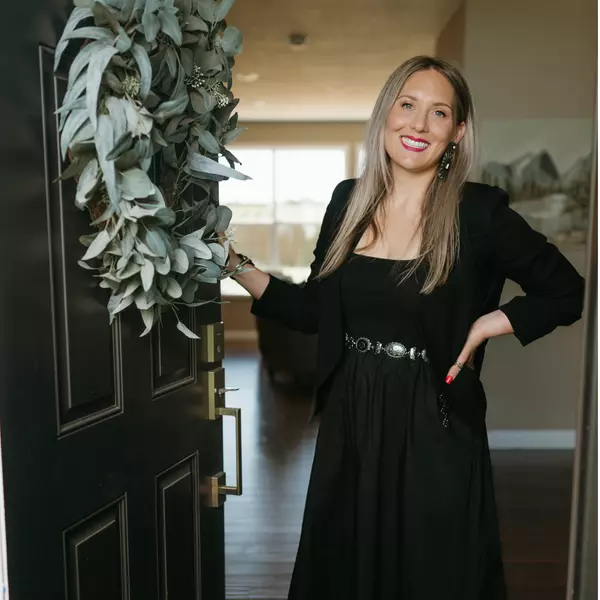
“I see my job as a Real Estate Advisor is to educate consumers about the realities of the Real Estate market of today. If you're ready to learn more about what it could mean for you to buy, sell, or invest in Real Estate, let's connect!"