
Rental Property Investment in Canby Oregon: Is It Worth It?

Is Now a Good Time to Invest in Rental Property in Canby and Surrounding Areas?
The honest answer? It depends entirely on your strategy — and it depends on numbers, not hype. If you're expecting Canby rental properties to cash-flow strongly right now on a standard 20% down mortgage, the math is going to disappoint you. But if your thesis is appreciation, forced equity, long-term hold, or an ADU play, there's a real case to be made.
Let me break down what the market actually looks like.
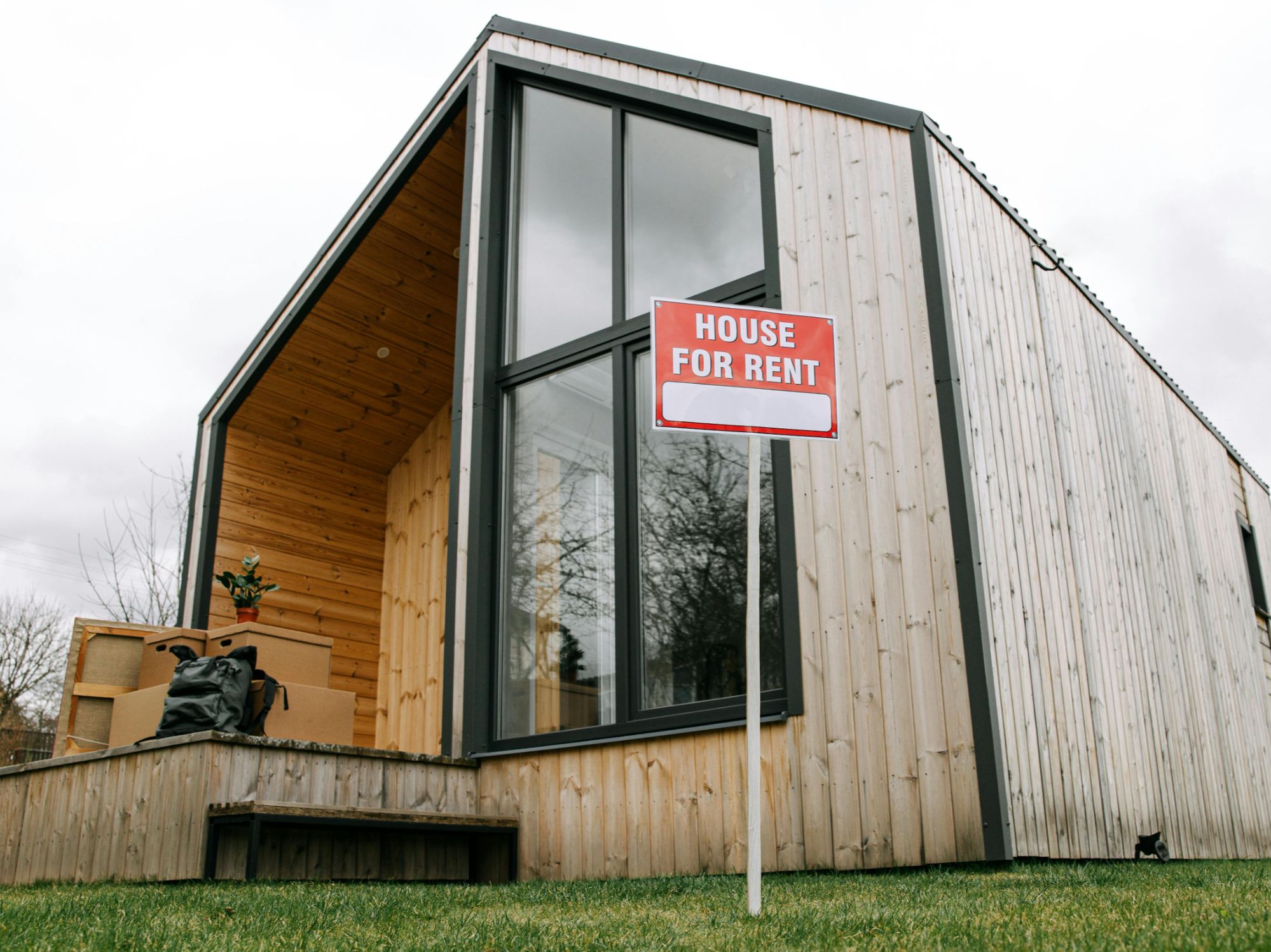
The Current Investment Math in Canby
Canby's median sale price came in at $546,000 in March 2026, up 7.3% year over year, according to Redfin data. That's meaningful appreciation. But appreciation doesn't pay your mortgage while the property sits.
On the rental side, Zumper's data from September 2025 puts the median rent in Canby at $1,887 across all property types. Single-family homes command more — closer to $2,500 per month when you're looking at 3- and 4-bedroom properties.
Here's what that pencils out to on a standard acquisition: A $546,000 purchase with 20% down ($109,200 down payment) at today's rate — Freddie Mac pegged the 30-year fixed at 6.37% as of April 9, 2026 — puts your principal and interest payment around $2,724 per month. Add in property management fees, maintenance reserves, insurance, and property taxes, and you're looking at real monthly expenses well above what $2,500 in rent covers.
That's not a scare tactic. It's just the current reality of higher-priced markets with rates still in the 6% range. Any experienced investor will tell you: never buy a rental for cash flow you have to assume will materialize.
What this means is that at current median prices, Canby is not a 1% rule market. It's a long-hold, appreciation-oriented play. If you need the property to cash-flow from month one on a traditional loan, you're going to be chasing a losing scenario unless you have a very specific angle.
What Makes Canby Interesting for Investors — The Real Angles
Canby still has legitimate investor appeal, but it requires the right strategy.
The ADU opportunity. Canby's relatively generous lot sizes and Oregon's statewide ADU legislation make accessory dwelling units an increasingly viable strategy. A property generating $2,500 from the main house plus $1,200 from a permitted ADU changes the math. You're still not crushing it at current rates, but you're meaningfully closer to breakeven — and you're also adding property value. Oregon's HB 2001 and subsequent legislation has removed many of the local barriers to ADU construction that used to stall these projects.
Tenant demand is not the problem. The City of Canby's Housing Needs Analysis documented a chronic shortfall in rental inventory, particularly at middle price points. Canby's 2019 occupancy rate sat at roughly 96.6% — only 225 vacant units out of 6,608 total. And rental construction has not kept pace with demand since then. Population projections from Portland State University put Canby's growth rate at about 1.3% per year through 2043. You're not going to struggle to find tenants.
Appreciation is real. The 7.3% year-over-year gain in March 2026 continues a consistent appreciation trend. If you're buying with a 10-15 year hold horizon and you have the capital reserves to weather early-year cash flow deficits, the equity accumulation case is legitimate.
Surrounding areas offer different entry points. If Canby's median feels stretched, look at Hubbard and Aurora — smaller communities in the North Willamette Valley with lower acquisition costs and solid rental demand from workers in nearby industrial corridors. They don't have the same name recognition as Canby, but rental properties acquired at $400,000–$450,000 pencil out differently. Woodburn's market offers similar dynamics, particularly around its commercial and industrial employment base.
Oregon Landlord Law: What Every Investor Needs to Know Before Buying
Oregon has some of the most tenant-protective landlord-tenant laws in the country. That's not a reason to avoid investing here — but you need to understand the rules before you're bound by them.
Rent stabilization. Oregon's statewide rent control law (ORS 90.323) caps annual rent increases for most properties over 15 years old. For 2026, the Oregon Department of Administrative Services set that cap at 9.5%. You can raise rents up to 9.5% in any 12-month period — but only once. Anything above that requires legal justification. Properties built within the last 15 years are exempt from rent stabilization, which is one reason investors pay close attention to year-of-construction when evaluating acquisitions.
No-cause eviction protections. Oregon eliminated most no-cause evictions under SB 608 (2019). If a tenant has lived in your property for more than 12 months, you generally need a qualifying reason to terminate tenancy — non-payment of rent, lease violation, or one of the specific "allowed" reasons under Oregon law. Plan your lease terms and tenant screening process accordingly.
Eviction timelines. For non-payment of rent on a month-to-month tenancy, the process under Oregon law (ORS 90.394) requires written notice — either 10 days from the eighth day rent is due, or 13 days from the fifth day rent is due. If the tenant doesn't pay, you file in court. Budget for the fact that evictions take time, even when you're clearly in the right.
No state real estate transfer tax. Oregon does not impose a state-level real estate excise tax on property sales. Closing costs for investment acquisitions typically run 2–3% of the purchase price, including title insurance and lender fees.
The Canby Market Right Now: A Snapshot for Investors
Redfin's March 2026 data shows 14 homes sold in Canby, with a median sale price of $546,000 and homes averaging 22 days on market. That's a significant shift from the 109-day average seen in early 2026 — the spring market is tightening supply and shortening timelines.
Fourteen sales in a month is a small inventory pool. When inventory is this thin, finding off-market deals or properties with genuine upside — deferred maintenance, under-market rents, ADU potential — requires real local knowledge and relationships. Canby doesn't have the deal flow of Portland or even Oregon City, and that cuts both ways. Properties don't sit forever, but there's also not a constant stream of new listings to analyze.
For investors targeting multi-family, the Canby market is genuinely undersupplied. The Housing Needs Analysis flagged a persistent rental housing gap at both lower and higher price points. Multi-unit properties rarely come to market here, and when they do, cap rates have historically run in the 5–6.5% range — stronger than what single-family homes typically generate in this market.
What This Means for You
If you're an investor trying to decide whether Canby makes sense, here's the practical translation:
Single-family rentals at current median prices require a long-term equity play. Don't expect monthly cash flow from year one on a traditional 20% down purchase unless you're bringing significant capital or generating multiple income streams from the property — like an ADU.
Buying below median changes the math meaningfully. Target properties with value-add potential: older construction eligible for renovation-driven re-pricing, deferred maintenance that scared off owner-occupant buyers, or properties in Hubbard, Aurora, or Woodburn where entry costs are lower and cash flow math is tighter.
New construction rental properties built within the last 15 years are exempt from Oregon's rent stabilization cap — a relevant factor if you're holding long-term and expecting rent growth to outpace the 9.5% cap that applies to older inventory.
Know your exit before you buy. The strongest Canby investors aren't expecting to cash out in two years. They're thinking about equity in 10, 15, 20 years in a market with documented housing demand and constrained supply. That's a legitimate investment thesis — but it requires patience and cash reserves, not just a loan approval.
Jennifer Schurter serves buyers, sellers, and investors throughout South Clackamas County and the North Willamette Valley — including Canby, Oregon City, Wilsonville, Aurora, Hubbard, Molalla, Woodburn, Newberg, Sherwood, Tualatin, West Linn, Lake Oswego, and the greater Portland metro south. Her goal is simple: to be the most knowledgeable, most responsive, and most genuinely helpful real estate agent in the area — every single time. Jennifer is a licensed Oregon real estate broker with Real Broker LLC.
Ready to talk through your next move? Schedule a time with Jennifer here. No pressure, no pitch — just a real conversation.
Categories
Recent Posts









“I see my job as a Real Estate Advisor is to educate consumers about the realities of the Real Estate market of today. If you're ready to learn more about what it could mean for you to buy, sell, or invest in Real Estate, let's connect!"