
Energy-Efficient Homes in Oregon: What They're Worth

Energy-Efficient and Tech-Forward Homes in Oregon: What They're Actually Worth
Oregon buyers are increasingly paying attention to how a home runs — not just how it looks. Solar panels, heat pumps, EV chargers, and smart home systems are showing up in more listings, and the data is starting to reflect real premium value. Whether you're buying and want to know what's worth more, or selling and wondering what to highlight, here's a straight look at what these features mean for Oregon home prices right now.
Oregon's Energy Landscape Is Changing — and So Are Buyer Expectations
Oregon's utility rates have increased roughly 50% since 2020, according to Canary Media's coverage of the state's 2026 energy code update. That's not a rounding error — it's a real shift in monthly costs that buyers are factoring into affordability calculations before they even make an offer. A home that uses significantly less electricity or generates its own isn't just an environmental statement; it's a financial one.
That context matters when you're evaluating two otherwise comparable homes. The one with documented lower utility costs has a concrete advantage that buyers can quantify. And as rates have climbed, that advantage has grown.
The regulatory picture is shifting, too. In February 2026, Oregon updated its Residential Specialty Code to require heat pumps in all new home construction — replacing ducted air conditioning systems as the standard. This means that new homes coming to market are built to a higher energy efficiency baseline than older stock. For buyers choosing between new construction and resale, that gap is now written into the building code. And for sellers of older homes, upgrading to a heat pump before listing is one way to close that gap.
Solar Panels: Real Value, With a Few Details to Know
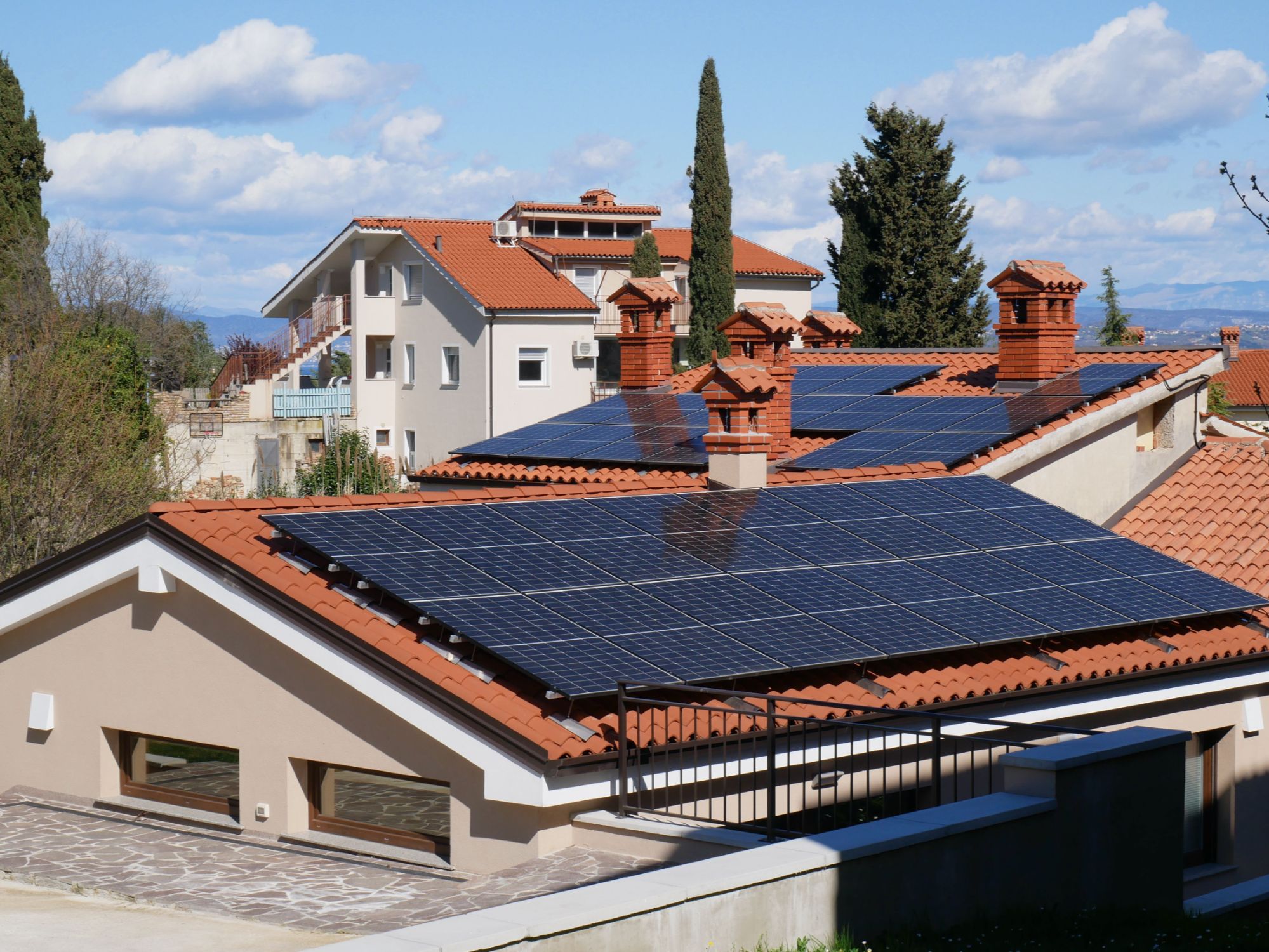
Solar panels are one of the most discussed efficiency features, and for good reason — in Oregon, they carry both a sale price premium and a tax incentive that makes them more attractive than in many other states.
Under Oregon Revised Statute §307.175, the added value from a qualifying solar system is permanently exempt from property tax assessment. That matters because it means a homeowner with a $20,000 solar array installed doesn't see their property tax bill go up as a result. That's a meaningful policy distinction, and it's worth understanding when you're evaluating whether solar makes financial sense.
On the sale side, research from Lawrence Berkeley National Laboratory cited by Opendoor puts the national solar premium at 3–4%, with a median premium near $15,000. A more specific 2026 data point from Solar Power World found that homes mentioning solar in the listing sold for roughly 2% more — about $10,000 on a median sale price of $557,000 — compared to similar homes without the mention. One important caveat: the system has to be documented properly. Age, remaining warranty, lease vs. owned status, and whether it's been maintained all affect how a buyer and appraiser evaluate it. A 15-year-old system with expiring panels is a different conversation than a four-year-old owned array.
Oregon also has state and federal incentive programs that make solar installation more accessible. The federal Investment Tax Credit (ITC) currently applies to residential solar, and Oregon's Department of Energy (ODOE) has continued to update residential programs as of April 2026. If you're buying a home with solar, ask for documentation: utility bills showing actual production and consumption, the original install contract, any warranty transfers, and whether the system is owned outright or under a lease or power purchase agreement — because each of those has different implications at closing.
Heat Pumps, EV Chargers, and the Features Oregon Buyers Are Paying For
Beyond solar, the data on a few other tech features is worth knowing.
Heat pump listings are showing a measurable sale price bump. Analysis cited by the efficiency research firm 257 found that homes with ducted heat pumps that sold between 2024 and 2025 — when the feature was mentioned in the listing — commanded 0.6%–1% more on average, or roughly $2,300–$3,800 on a typical sale. That's not enormous, but it's real, and it compounds with the energy savings a buyer factors into their ongoing costs. On Oregon's current utility rates, a heat pump that costs half as much to run as a gas furnace is worth something concrete every month.
EV chargers are a fast-moving category. According to a 2026 study by ChargeRight, listings mentioning EV chargers have surged 91.6% — a sign of both growing buyer interest and sellers catching on to the value of highlighting them. The value of an EV charger varies considerably by market; Pacific Northwest markets, including Oregon, tend to index higher because of the region's strong EV adoption rates. A Level 2 home charger installation typically runs $1,500–$3,500, and the ROI can be disproportionately high if the buyer pool in your price range has a meaningful share of EV owners.
Smart home features are a category where buyer preferences are more nuanced. NAR's 2026 Generational Trends Report found smart home features cited across buyer age groups, with younger buyers prioritizing them more heavily. The features with the clearest value are those that save money or reduce friction: smart thermostats (documentable energy savings, strong buyer appeal), smart locks, and video doorbells. Premium smart home systems — voice-controlled everything, app-integrated appliances — have a narrower buyer pool and are harder to appraise. Stick to the basics if you're prepping to sell, and highlight what you have if you're already there.
What the Oregon Market Looks Like Right Now
Statewide context is useful for grounding these features in real market conditions. HomeStats data for July 2026 shows Oregon's median sale price at $525,500, with active inventory around 15,036 homes. The market has been described as roughly neutral — not a runaway seller's market, but not a buyer's market where you can demand concessions on everything. That balance means the differentiation that features like solar and heat pumps provide matters more, not less. In a slower market, a well-documented energy-efficient home can stand out clearly. In a competitive one, it can tip a multiple-offer situation.
In the Canby, Oregon City, and Wilsonville corridor where Jennifer Schurter works, the market has been running a bit tighter than the statewide picture. Buyers in these communities are often comparing multiple options in the $550,000–$700,000 range, and energy costs — especially for larger homes on larger lots — are a real line item in their monthly budget math.
One local factor worth knowing: Oregon's 50% utility rate increase since 2020 has made energy costs a regular part of buyer conversations in this market. It's not unusual now for buyers to ask for utility bills before submitting an offer. Having that documentation ready, and knowing your annual energy costs, is increasingly good practice for sellers regardless of whether your home has solar.
What This Means for You
If you're buying: Don't just look at the listing price. Ask for 12 months of utility bills on any home with solar, a heat pump, or claims of high efficiency. Check whether solar is owned or leased — a leased system transfers to you and comes with contractual obligations, which is different from an owned array. Ask whether any home energy rating documentation exists (some newer homes have HERS scores).
Homes with newer heat pumps, owned solar, and EV chargers are likely priced to reflect those features. That's fair — but verify the documentation. A premium is only worth paying if the equipment is in good condition and the savings projections are realistic.
If you're selling: Document everything. Utility bills, install contracts, warranty information, and any ODOE or ITC filings should be ready to share. Mention energy features prominently in the listing — the data on listing-mention premiums is consistent. If your home has a heat pump or solar and it's not in the headline, you're leaving money on the table.
Upgrades worth considering before listing, if you're in a price range where buyers are comparison-shopping: a smart thermostat (inexpensive, easy to document, universally appreciated), an EV charger if your garage is prewired, and high-efficiency appliances if you're replacing them anyway. Big-ticket items like solar panels and new HVAC systems require a longer payback horizon; whether they make sense before a sale depends on how much time you have and what the comparable homes in your neighborhood offer.
The goal isn't to load a home with technology for its own sake. It's to make sure the home's actual operating costs are visible, documented, and positioned honestly in the listing.
Jennifer Schurter serves buyers, sellers, and investors throughout South Clackamas County and the North Willamette Valley — including Canby, Oregon City, Wilsonville, Aurora, Hubbard, Molalla, Woodburn, Newberg, Sherwood, Tualatin, West Linn, Lake Oswego, and the greater Portland metro south. Her goal is simple: to be the most knowledgeable, most responsive, and most genuinely helpful real estate agent in the area — every single time. Jennifer is a licensed Oregon real estate broker with Real Broker LLC.
Ready to talk through your next move? Schedule a time with Jennifer here: https://calendly.com/jen-475/
Categories
Recent Posts









“I see my job as a Real Estate Advisor is to educate consumers about the realities of the Real Estate market of today. If you're ready to learn more about what it could mean for you to buy, sell, or invest in Real Estate, let's connect!"