
What Makes an Oregon City Neighborhood Walkable?
What Makes an Oregon City Neighborhood Actually Walkable, and Why It Matters to Buyers
Walkability in Oregon City is not as simple as looking at a map and checking how close a home is to downtown. The city's hills, historic street patterns, and two distinct levels mean that a home that looks close to Main Street can feel very different once you actually walk the route. If being able to walk to coffee, restaurants, the library, transit, or the river matters to you, knowing which parts of Oregon City really deliver that experience can change how you look at a home.
Why Oregon City's Terrain Changes the Answer
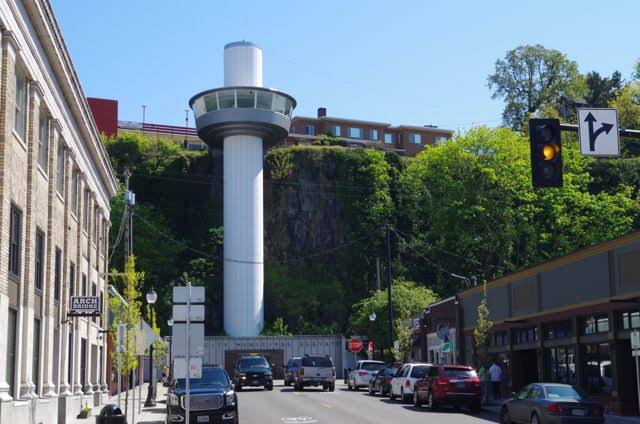
Most cities are relatively straightforward when it comes to walkability because distance and density tend to tell most of the story. Oregon City is different because the community sits on two levels connected by a roughly 130-foot basalt bluff. The city's Municipal Elevator was built in 1915 and rebuilt in 1954 specifically to help people move between those levels, and it remains one of only four public street elevators in the world.
That elevation difference changes what a "walkable" neighborhood actually means here. A home that is half a mile from downtown on relatively flat streets can offer a very different experience from a home the same distance away that requires a steep climb. Two properties can look equally close on a map while one feels like an easy daily walk and the other feels like an occasional workout.
Walk Score also shows how dramatically walkability can change from one Oregon City neighborhood to another. Some downtown Main Street addresses can score in the low 80s, putting them in the "Very Walkable" category, while homes farther out in neighborhoods such as Hillendale or Caufield can fall into the 20s or 40s. Same city, same general community, but a very different day-to-day experience.
The McLoughlin neighborhood and areas around the historic core sit somewhere in the middle for many buyers. These areas can provide access to downtown shops, the library, the McLoughlin Promenade, and other destinations without requiring you to live directly on Main Street. For buyers who want some walkability without giving up as much residential space, that middle ground can be especially appealing.
What Does Walkability Actually Get You?
Downtown Oregon City and the McLoughlin Promenade area offer the kind of walkability that can become part of your everyday routine. Depending on where you live, destinations such as restaurants, the Oregon City Transit Center, the library, and the promenade can be reached without getting into a car. The McLoughlin Promenade itself also provides a paved route along the bluff with river views, giving residents another reason to walk beyond simply running errands.
That distinction matters because there is a difference between being close to something and actually using it on foot. A home that allows you to walk to dinner, grab coffee, visit the library, or reach transit can change how often you drive for short trips. Those small conveniences can add up over time and become one of the things you appreciate most about where you live.
Move farther into the hillside neighborhoods and the equation changes. You may get larger lots, more privacy, quieter streets, and more separation between homes, but everyday errands are more likely to require a car. That is not necessarily a disadvantage, but it is a different lifestyle from living close enough to downtown that walking is a realistic option.
Why the Map Does Not Tell the Whole Story
Online maps and walkability scores can be useful starting points, but they cannot always tell you what a particular walk actually feels like. A map may show that a restaurant or coffee shop is only a few minutes away without accounting for steep grades, missing sidewalks, crossings, or the route you would actually take. In Oregon City, those details matter more than they might in a flatter community.
This is especially important for buyers who are thinking about how they will use the neighborhood every day. A ten-minute walk with a stroller, groceries, young children, or mobility concerns can feel very different from a ten-minute walk on a flat sidewalk. The only reliable way to understand that experience is to walk the actual route yourself.
The same applies when a listing describes a home as being "close to downtown." Close can mean a short, comfortable walk, or it can mean the destination is nearby but separated by elevation and a less convenient route. Looking beyond the listing description can give you a much clearer picture of what living there would actually feel like.
Local Market Context
Oregon City's housing market also adds another layer to the walkability conversation. Recent Redfin data showed a median sale price around $579,000 as of mid-2026, with homes typically taking about 21 days to sell compared with 18 days the previous year. That represents a somewhat slower pace than the previous year, although desirable homes in popular parts of the city can still attract attention quickly.
The walkable core is also a relatively limited piece of the overall Oregon City housing market. Downtown and the historic neighborhoods around it are largely built out, which means buyers looking specifically for walkability are choosing from a smaller pool of homes than someone searching across the entire city. When the right property comes along, there may not be several nearly identical alternatives sitting nearby.
That is different from some of the hillside neighborhoods, where there is generally more room and a broader mix of residential properties. Buyers looking for space may have more choices there, while buyers prioritizing walkability may need to be more selective about location. The citywide market statistics are useful, but they do not always tell the full story of a specific neighborhood.
How to Think About Walkability and Space
Walkability often comes with trade-offs, and Oregon City makes those trade-offs particularly noticeable. Homes closer to downtown may offer smaller lots, older construction, and less separation between properties, while homes farther out can provide more space and privacy but require more driving. Neither option is automatically better because the right choice depends on what you actually want your daily routine to look like.
For one buyer, being able to walk to dinner or coffee may be worth giving up a larger yard. For another, having room for a workshop, garden, or extra parking may matter much more than being able to walk downtown. The important thing is recognizing the difference before you fall in love with a house based only on its photos or its distance from a destination.
This is why the neighborhood should be evaluated alongside the house itself. A beautiful home can still be a poor fit if its location does not support the lifestyle you want. On the other hand, a smaller or older home in a highly walkable area may become more appealing once you realize how often you could actually use the neighborhood around it.
What This Means for You
If walkability is important to you, do not rely on one Walk Score or a citywide label to make the decision. Look at the specific address, identify the places you would realistically visit, and then walk those routes yourself. Pay attention to hills, sidewalks, crossings, traffic, and how comfortable the trip feels rather than simply counting the minutes on a map.
If you are comparing downtown, McLoughlin, Barclay Hills, and the hillside neighborhoods, think about what you want your normal Tuesday to look like. Do you want to walk to dinner, coffee, the library, or transit, or would you rather have a larger property and quieter surroundings even if that means driving for most errands? Neither answer is wrong, but knowing which one matters more can make your home search much more focused.
And if you find a home in the walkable core that checks your boxes, remember that this part of Oregon City's housing inventory is limited. You may not have five nearly identical homes to compare at the same time, so understanding your priorities before you start touring can help you recognize the difference between a property that is simply close to downtown and one that genuinely fits the walkable lifestyle you want.
Ultimately, walkability in Oregon City is about more than a number on an app. It is about elevation, sidewalks, destinations, neighborhood layout, and whether you can realistically see yourself making those trips on foot. The best way to understand it is to experience the neighborhood at street level before deciding whether the location works for your everyday life.
Jennifer Schurter serves buyers, sellers, and investors throughout South Clackamas County and the North Willamette Valley — including Canby, Oregon City, Wilsonville, Aurora, Hubbard, Molalla, Woodburn, Newberg, Sherwood, Tualatin, West Linn, Lake Oswego, and the greater Portland metro south. Her goal is simple: to be the most knowledgeable, most responsive, and most genuinely helpful real estate agent in the area — every single time. Jennifer is a licensed Oregon real estate broker with Real Broker LLC.
Have questions or want to get started? Connect with Jennifer here. She'd love to hear from you.
Categories
Recent Posts








“I see my job as a Real Estate Advisor is to educate consumers about the realities of the Real Estate market of today. If you're ready to learn more about what it could mean for you to buy, sell, or invest in Real Estate, let's connect!"