
How Much House Can I Afford in Canby, Oregon?
How Much House Can I Afford in Canby, Oregon on My Income?
The short answer: most buyers purchasing in Canby today need a household income somewhere between $90,000 and $130,000 to comfortably afford the median-priced home — depending on your down payment, existing debt, and loan type. But the real answer is more nuanced than a single income figure, and understanding the moving parts gives you a far better starting point than any generic calculator online.
Here's how to actually think through what you can afford in Canby right now.
What Canby Homes Are Actually Selling For in 2026
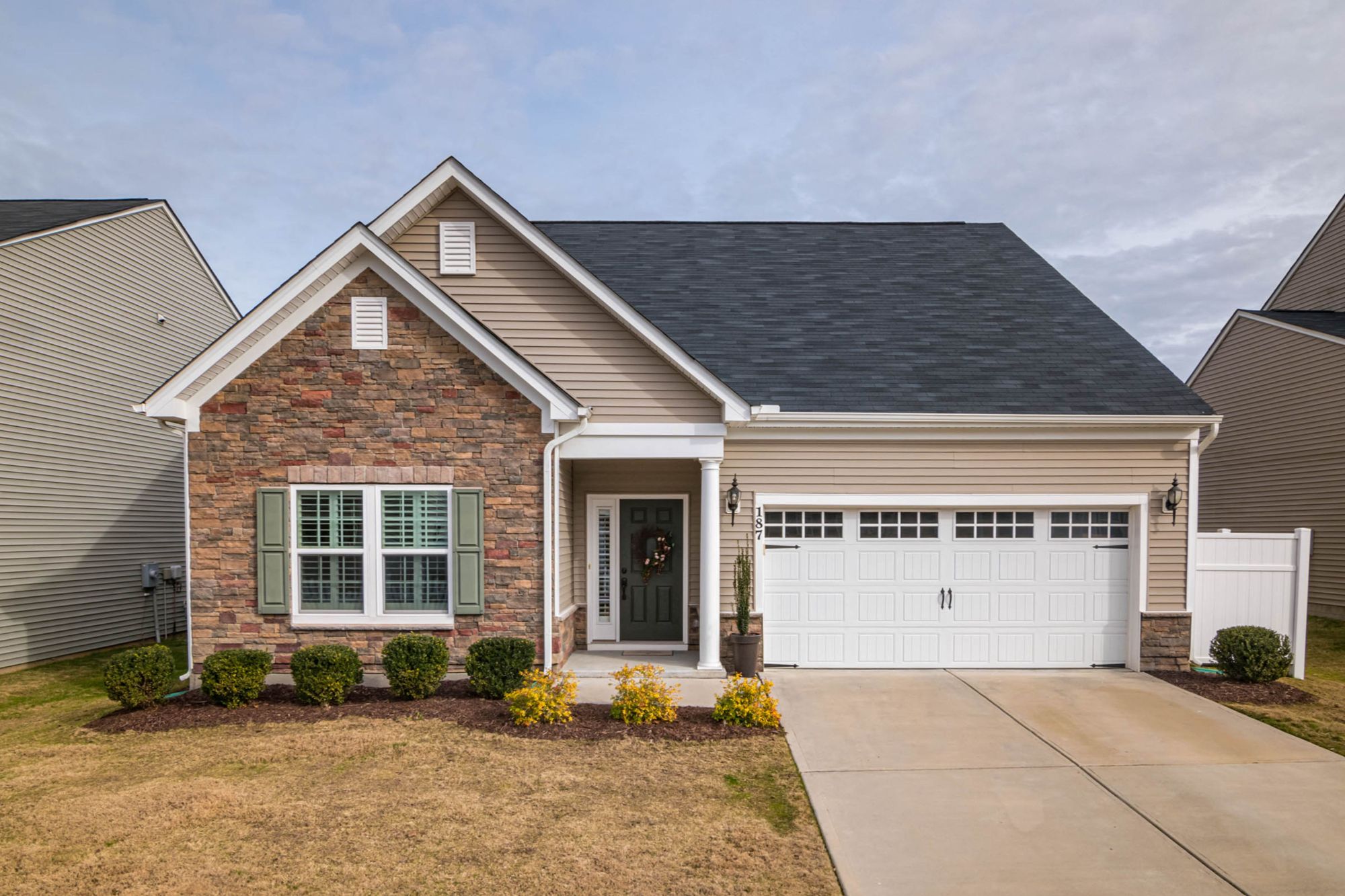
Before you can know what you can afford, you need to know what you're working with. According to Redfin data, the median sale price in Canby was $546,000 as of March 2026 — up 7.3% from a year earlier. That's the midpoint of what sold. Some homes move below $450,000; well-appointed properties on larger lots push toward $700,000 and beyond.
The practical range for most buyers — three- and four-bedroom homes in move-in condition with standard finishes — tends to fall between $480,000 and $650,000. That's the core Canby market, and that's the range your budget math needs to work within.
Worth knowing: Canby's price appreciation has outpaced the broader Oregon market. Statewide, the median sale price in May 2026 sat at $518,159, down slightly year-over-year, per Redfin. Canby has held stronger because the supply of available homes remains tight relative to demand from buyers who specifically want this kind of community — smaller city feel, real yards, proximity to farm country, and a commute to the Portland metro that's manageable without being in the thick of it.
The Math: Income, Rates, and Monthly Payments
Lenders use debt-to-income ratio (DTI) as the primary test of affordability. For conventional loans, most lenders want your total monthly debt payments — including your new mortgage — to stay at or below 43% to 45% of your gross monthly income. The front-end ratio (just housing costs: principal, interest, taxes, and insurance) ideally stays under 28%.
Here's what those ratios look like in practice for a Canby purchase at today's rates.
As of June 18, 2026, the 30-year fixed-rate mortgage averaged 6.47% according to Freddie Mac. Oregon borrowers are seeing rates in a similar range — Bankrate showed a statewide average of 6.59% as of June 22, 2026. Let's use 6.5% as a working rate for illustration.
On a $546,000 home with 10% down ($54,600): - Loan amount: ~$491,400 - Principal + interest at 6.5%: ~$3,104/month - Property taxes: ~$378/month (Canby's median annual tax bill is approximately $4,538, per Ownwell data on Clackamas County — effective rate around 0.96%) - Homeowner's insurance: ~$125–$175/month (estimate) - Total housing payment: roughly $3,600–$3,650/month
To keep that housing payment under 28% of gross income, you'd need roughly $155,000–$157,000 in annual income — with no other significant debt.
But most buyers carry some debt. If you have a car payment, student loans, or other monthly obligations, those count against your back-end DTI. If your non-housing monthly debts total $600, your total monthly debt ceiling at 43% DTI and $155K income is around $5,554 — so $3,650 in housing plus $600 in debts = $4,250, which keeps you inside the limit with room to spare.
On a $480,000 home with 10% down: - Loan amount: ~$432,000 - Principal + interest at 6.5%: ~$2,729/month - Taxes + insurance: ~$460–$510/month - Total housing payment: roughly $3,190–$3,240/month
That payment target corresponds to roughly $137,000–$140,000 in annual income under the 28% front-end guideline.
These are guidelines, not hard rules. Lenders look at your complete financial picture — your credit score, employment history, savings, and loan type all factor in.
How Loan Type Changes Your Affordability
The loan product you use matters more than most buyers expect.
Conventional loans are what most people think of. They require a minimum 620 credit score and typically at least 3–5% down for first-time buyers. PMI (private mortgage insurance) applies if you put down less than 20%, adding $150–$300/month to a payment on a $500,000 loan.
FHA loans allow lower credit scores (580 minimum for 3.5% down) and slightly more flexible DTI ratios — lenders routinely approve up to 57% back-end DTI with compensating factors. The tradeoff is mandatory mortgage insurance premium (MIP) both upfront (1.75% of the loan) and monthly for the life of the loan. That's a real cost to factor in. The FHA loan limit for Clackamas County in 2026 is $657,800 for a single-family home, so it covers the Canby market.
VA loans — for eligible veterans, active service members, and surviving spouses — have no down payment requirement, no PMI, and are often the most powerful affordability tool available. If you qualify, this should be your first conversation with a lender.
USDA loans are sometimes overlooked, but parts of the area surrounding Canby may qualify for USDA Rural Development loans, which also allow zero down. Eligibility depends on the specific property address and the buyer's income relative to area limits. Worth checking if you're looking at more rural properties.
Oregon Down Payment Assistance: What's Available in Canby
Down payment is often the bigger hurdle than monthly payment for Canby buyers — coming up with $27,000–$55,000 or more to put down on a $540K home isn't easy, especially with today's rents.
Oregon Housing and Community Services (OHCS) runs down payment assistance programs that are available to eligible Canby buyers. The current program provides up to $60,000 or 20% of the purchase price (whichever is less) in closing cost and down payment help for first-time and first-generation homebuyers at or below 100% of area median income. In Clackamas County, that income limit is $124,871 for a one- or two-person household, and $143,601 for households of three or more.
This isn't a niche program buried in fine print — it's a meaningful amount of money that can shift a $480,000 purchase from out of reach to doable for buyers who've built income but haven't been able to accumulate a large down payment. The program does require completion of a homebuyer education course and a session with a certified housing counselor. That's a reasonable ask.
If your income is above those limits, you're not out of options. Many credit unions and lenders active in the Oregon market offer their own down payment assistance or first-time buyer programs with competitive rates. This is worth discussing directly with a lender who knows the Oregon market.
What the Canby Market Means for Your Budget Timeline
Canby isn't a market where you can wait out prices and catch a significant dip. Since early 2025, the market has tracked upward. Inventory remains limited — buyers who've been on the fence often find that the homes they were watching quietly appreciated while they were waiting for the "right time."
That doesn't mean you should rush into a purchase that doesn't make financial sense. It does mean that getting clear on your budget now — before homes you want hit the market — puts you in a much stronger position. Sellers in Canby respond to buyers who come with pre-approval in hand and know their numbers.
The practical steps: get pre-approved by a lender who knows Clackamas County, run your actual DTI with your current debts included, and ask specifically about OHCS programs if your income falls within the eligibility range. Those conversations take a couple of hours and change what's possible.
What This Means for You
Here's the plain summary for a Canby buyer in 2026:
- The core market for a three-to-four-bedroom home runs roughly $480,000–$650,000.
- At today's rates (around 6.5%), a $546,000 purchase with 10% down carries a total housing payment in the $3,600 range — which generally requires household income of $130,000–$155,000 depending on your other debt.
- FHA and VA loans can stretch affordability meaningfully, especially if you have less than 20% down or carry existing debt.
- OHCS down payment assistance offers up to $60,000 for income-eligible first-time and first-generation buyers in Clackamas County.
- Your actual number is what a lender calculates with your full picture — income, credit score, debts, and savings. Generic calculators give you a starting point; a pre-approval gives you the real answer.
The goal isn't to get maximum approval. It's to know the payment you're genuinely comfortable with — and then find the right home within that range. Those are different conversations, and the second one matters more.
Jennifer Schurter serves buyers, sellers, and investors throughout South Clackamas County and the North Willamette Valley — including Canby, Oregon City, Wilsonville, Aurora, Hubbard, Molalla, Woodburn, Newberg, Sherwood, Tualatin, West Linn, Lake Oswego, and the greater Portland metro south. Her goal is simple: to be the most knowledgeable, most responsive, and most genuinely helpful real estate agent in the area — every single time. Jennifer is a licensed Oregon real estate broker with Real Broker LLC.
Have questions or want to get started? Connect with Jennifer here. She'd love to hear from you.
Categories
Recent Posts





“I see my job as a Real Estate Advisor is to educate consumers about the realities of the Real Estate market of today. If you're ready to learn more about what it could mean for you to buy, sell, or invest in Real Estate, let's connect!"