
Rising Construction Costs: What Oregon Buyers Get in 2026
How Rising Construction Costs Are Changing What Buyers Get for Their Money in 2026
Short answer: Building a house in Oregon costs more than it used to, but new-home sticker prices have not climbed in a straight line. Builders are absorbing some of the pressure through smaller price tags, incentives, and tighter designs, while fees and labor keep the floor high. For buyers, that changes what a given budget actually buys, and it changes where the negotiating room is.
What is really driving the cost of building
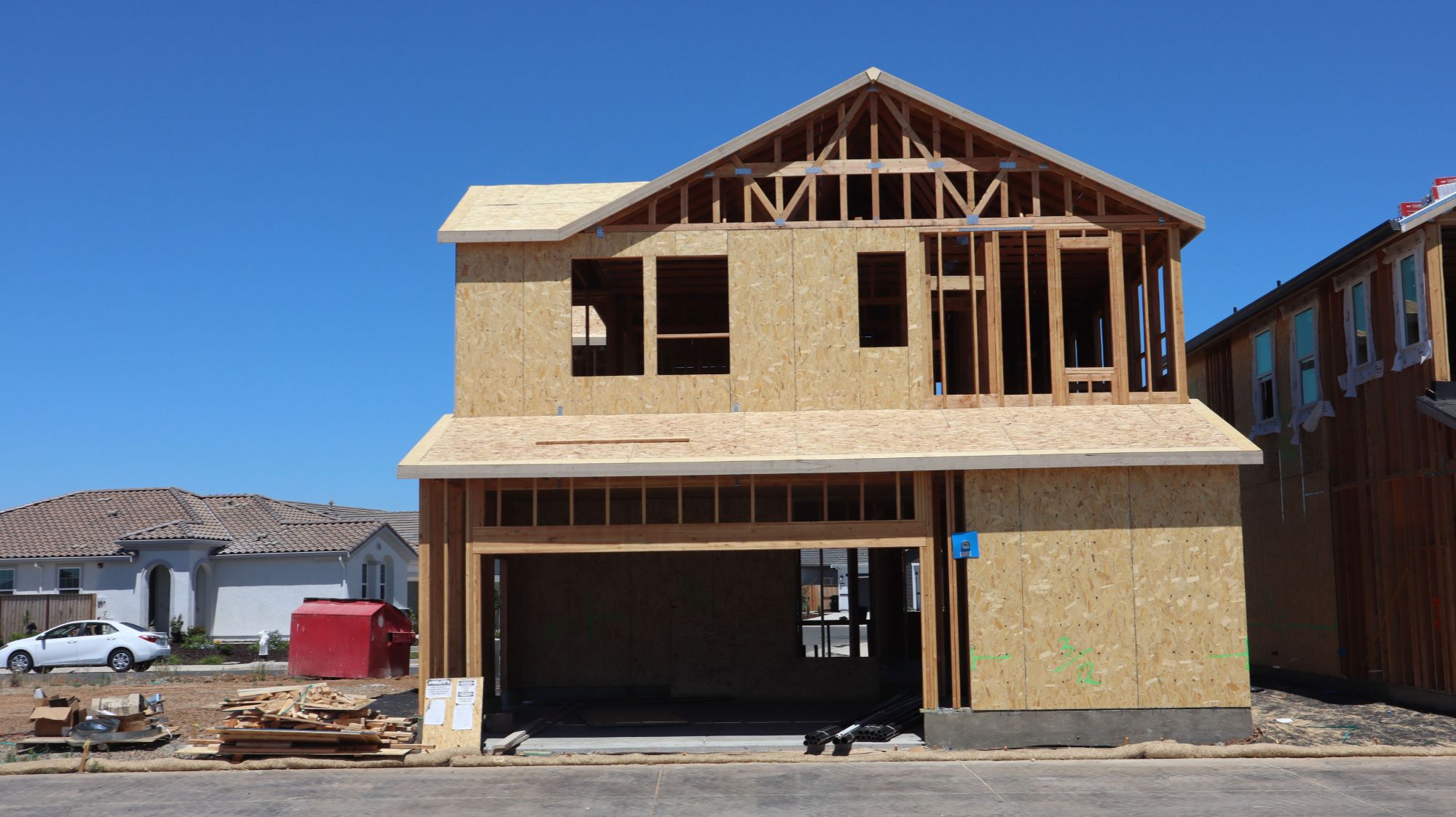
Lumber gets the headlines, but the bigger drivers in Oregon are less dramatic: skilled labor, land that is already serviced with utilities, and the government fees attached to every new home. Materials swing with tariffs and supply. Labor and fees mostly only move one direction.
Fees deserve a closer look because buyers rarely see them. System development charges (SDCs) are one-time fees cities and counties charge when a new home connects to sewer, water, roads, and parks. They are baked into the price of every new house. In February 2026, Canby city council materials put the city's current SDCs at about $27,774 per single-family home, and showed the maximum the city's consultants said it could justify at $58,060. For comparison, those same materials listed roughly $62,890 for Wilsonville's Frog Pond West area and $72,116 for South Hillsboro. In July 2026, Canby adopted a new SDC methodology report, so the figures a builder pays today may differ from those council numbers. The takeaway is simple: tens of thousands of dollars per home can be fees alone, before a single board is cut.
Clackamas County's own sanitary sewer SDC rose to $9,630 per equivalent dwelling unit effective July 1, 2026, up about 2.7% from the prior fee, according to the county. Small annual bumps like that stack up over time.
What new-home prices are actually doing
Here is the part that surprises people. Higher costs have not translated into ever-higher new-home prices nationally. According to the U.S. Census Bureau's August 2026 new residential sales report, the median price of a new house sold was $393,700, about 5.8% below August 2025's $417,900. HousingWire reported that builders are cutting prices and that new-home supply is sitting at about 8.5 months.
That is a national picture, and Oregon runs differently. But the mechanism carries over. When costs are high and buyers are rate-sensitive, builders protect their margins through size and specification rather than only through list price. NAHB data shows the median new single-family home was around 2,185 square feet in the latest quarter, a size that has leveled off after shrinking over the past decade (the average new home was about 300 square feet larger ten years ago, per NAHB's analysis of Census data).
In plain terms, a budget buys you a different house than it did five years ago: often a smaller footprint, a simpler exterior, a flex room instead of a formal dining room, and finishes tuned to cost. That is not a bad thing. It is a different tradeoff, and worth understanding before you compare a new build with a resale home.
The rate problem sits on top of the cost problem
Construction cost is only one half of monthly affordability. The other half is your mortgage rate, and it moved the wrong way this week. Freddie Mac's Primary Mortgage Market Survey put the 30-year fixed rate at 7.28% on October 1, 2026, up from 7.03% the prior week and the highest reading in nearly three years. A year ago it was 6.34%.
On a $450,000 loan, the gap between 6.34% and 7.28% is roughly $280 more per month in principal and interest. That is why so many builders lean on rate buydowns and closing-cost credits. Those incentives can be worth real money, but they are paid for somewhere, often in a firmer price or fewer included upgrades. I walked through how builder buydowns actually work in an earlier post, and the short version is that you should always compare the buydown deal against a straight price reduction.
Oregon local context: where resale fits in
Statewide, Redfin data shows Oregon's median sale price was $523,118 in July 2026, up 1.6% from a year earlier, with 3,977 homes sold, up 3.5%. Resale prices have been rising modestly, not surging. That matters because new construction competes against that resale pool.
In Canby, Oregon City, and Wilsonville, new construction is concentrated in a handful of subdivisions, and the SDC differences between cities help explain why. A city with high impact fees and expensive land development pushes new-home pricing up. A city with lower fees may deliver a builder more room to price competitively or add inventory. If you are shopping new in more than one city, ask the builder directly what part of the price reflects fees and what part reflects the lot, because that is where the real difference lives. If you want to know which nearby communities have active builders right now, reach out and I will point you in the right direction.
What this means for you
If you are buying new: - Compare the all-in monthly payment, not just list price. A buydown that lowers your rate for two years is not the same as a lower permanent price. - Ask which upgrades are included and which are priced separately. Lot premiums and options can add tens of thousands. - Get your own lender quote alongside the builder's preferred lender. Compare the loan estimates side by side. - Hire your own representation. The builder's sales agent works for the builder.
If you are weighing new against resale: - Resale homes often come with larger lots and mature landscaping, while new builds come with warranties and current energy codes. Neither wins automatically. - Price per square foot comparisons only work when you use the same source and metric on both sides. - Budget for the things a new home usually lacks on day one: fencing, landscaping, window coverings.
If you are selling: - Rising replacement cost supports resale values over time, because the alternative for a buyer is building something new at today's costs. It does not guarantee a price, but it is a floor of sorts. - Pricing correctly from day one still matters more than any cost trend.
I know it can feel like every headline pulls in a different direction. Costs are up, new-home prices are softer, and rates just jumped. The honest read is that the best deal depends on the specific house, the specific builder, and your specific numbers. That is the kind of thing I like to work through with you one-on-one.
Data as of October 3, 2026. Sources: U.S. Census Bureau New Residential Sales (August 2026); Freddie Mac PMMS (October 1, 2026); Redfin Oregon housing market data (July 2026); NAHB; HousingWire; City of Canby SDC materials; Clackamas County Water Environment Services.
Jennifer Schurter serves buyers, sellers, and investors throughout South Clackamas County and the North Willamette Valley — including Canby, Oregon City, Wilsonville, Aurora, Hubbard, Molalla, Woodburn, Newberg, Sherwood, Tualatin, West Linn, Lake Oswego, and the greater Portland metro south. Her goal is simple: to be the most knowledgeable, most responsive, and most genuinely helpful real estate agent in the area — every single time. Jennifer is a licensed Oregon real estate broker with Real Broker LLC.
Have questions or want to get started? Connect with Jennifer here. She'd love to hear from you.
Categories
Recent Posts






“I see my job as a Real Estate Advisor is to educate consumers about the realities of the Real Estate market of today. If you're ready to learn more about what it could mean for you to buy, sell, or invest in Real Estate, let's connect!"