
Oregon Measure 50 Explained: Clackamas County Home Buyers
Oregon Measure 50 Explained: How Property Tax Limits Work When You Buy a Home in Clackamas County
Measure 50 caps how fast the taxable value of a home can grow, but it does not cap what you pay for the home, and it does not reset when you buy. In Oregon, your property tax bill is built on a figure called maximum assessed value (MAV), which can rise by no more than 3% a year, rather than on your purchase price. That is why two neighboring houses in Clackamas County can sell for the same amount and carry very different tax bills.
If you are buying here, understanding this one system will help you budget more accurately than any quick online estimate.
What Measure 50 actually did
Oregon voters passed Measure 50 in 1997. It rolled back each property's assessed value for the 1997-98 tax year to 90% of its 1995-96 real market value, according to the Oregon Department of Revenue. From that starting point, MAV can grow by a maximum of 3% per year, unless something changes about the property.
Oregon property has two main numbers. Real market value (RMV) is what the county assessor estimates your property would sell for. Maximum assessed value (MAV) is the capped figure. Your taxes are calculated on the assessed value, which is the lesser of the two. In most years for most homes, that means MAV, because a long run of price growth pushed RMV well above the capped number.
Clackamas County's Assessment and Taxation office reports that for the 2025-26 tax year, about 6.0% of properties in the county are paying on real market value because it has fallen below their Measure 50 value. For the other roughly 94%, the cap is doing its job and the taxable value sits below market value.
The part that surprises buyers: the cap stays with the house
This is the point I explain most often. Measure 50 limits attach to the property, not the owner. When a home sells, MAV does not jump to the new purchase price. The seller's MAV carries over to you, and it keeps growing at up to 3% a year.
So if a home last had a purchase price in the mid-2000s and a long-time owner has been paying tax on a MAV far below today's market value, you inherit that lower taxable base. Compare that with a home built recently, where the MAV was set much closer to current value. Same price tag, very different tax picture.
Here is a simple hypothetical, not a quote for any real address. Say a house sells for $620,000 and its MAV is $330,000. Taxes are figured on $330,000 multiplied by the combined tax rate for that property's taxing districts. A comparable house with a MAV of $520,000 would carry a meaningfully larger bill for the same sale price. The tax statement shows both numbers, and it is worth reading before you write an offer.
Oregon does not reassess on sale, which is also why you cannot predict your bill by multiplying the purchase price by a county-wide percentage. Averages published by third-party sites mix old and new MAVs together and can be off for any single home.
When the 3% cap does not apply
MAV can grow faster than 3% when the property changes. The Department of Revenue calls these exceptions, and they include:
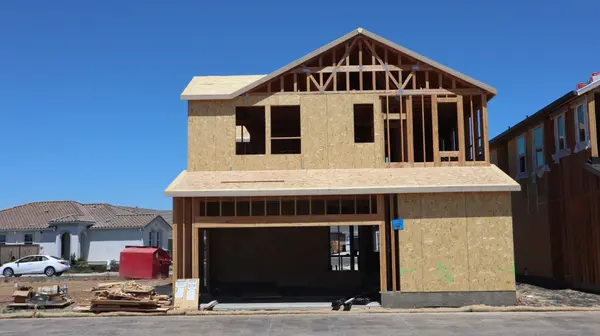
- New construction or additions that add value, such as a new garage, a finished basement, or an accessory structure
- Partitions and subdivisions of land
- Rezoning or changes in use that affect the property
- Loss of a special assessment or exemption, such as a tax deferral program ending
This matters if you are buying with renovations in mind. A major remodel or addition can add to your MAV on top of the annual 3%. Routine maintenance and repairs generally do not. If you plan to build something sizable, ask the county Assessment and Taxation office how it would be treated. They are the authority, and the answer depends on the specifics.
Rural buyers should also know that land with farm or forest deferrals follows its own rules, and losing that status can trigger additional taxes. That is a separate topic from Measure 50 but worth keeping in mind on acreage.
What this looks like in Clackamas County right now
According to Redfin data, the median sale price in Clackamas County was about $623,000 over the three months through September 2026, down 4.2% from the same period a year earlier. That is the market value side of the equation.
Measure 50 acts as a buffer between market swings and your bill. When prices drop, a home's RMV can fall, but MAV keeps its 3% path. Only when RMV drops below MAV does the lower figure take over, which is what Clackamas County's 6.0% figure represents. Even in that case, once RMV rises back above MAV, you return to the capped MAV.
One more number to keep in mind is the cost of borrowing. Freddie Mac's survey put the average 30-year fixed rate at 7.40% for the week ending October 8, 2026, up from 7.28% the week before. Since property tax is part of your monthly escrow payment, a lower-than-expected bill on a home with a low MAV can help a payment pencil out. But also plan for the bill to grow gradually: roughly 3% a year on the taxable value, plus any changes in local levies and bonds.
Voter-approved bonds and local option levies are separate from Measure 50's cap on assessed value growth, and they vary by district. Two Clackamas County addresses with the same assessed value can pay differently depending on which fire, school, library, or city districts they sit in.
What this means for you
Measure 50 is not a reason to buy or avoid any particular home. It is a reason to look at the actual tax statement instead of relying on a general estimate. Here is what I would do as a buyer:
- Ask for the current tax statement for every home you seriously consider and find both the RMV and the MAV.
- Plan for the bill to rise about 3% a year, plus any district levy changes. Do not assume the current number stays flat.
- Do not assume your bill will match the seller's if you add square footage or build new structures.
- Look up the taxing districts for the property, since the combined rate depends on location.
- Talk with your lender early so the estimated taxes in your payment are based on the real statement, not a guess.
For sellers, the flip side is that a low MAV is a genuine selling point to mention accurately. It should be described using the tax statement, never a guess.
I am always happy to pull the tax details on a home you are considering and walk through what they mean for your monthly budget. This article is general information, not tax advice, and the county assessor or a tax professional can answer questions about a specific property.
Jennifer Schurter serves buyers, sellers, and investors throughout South Clackamas County and the North Willamette Valley — including Canby, Oregon City, Wilsonville, Aurora, Hubbard, Molalla, Woodburn, Newberg, Sherwood, Tualatin, West Linn, Lake Oswego, and the greater Portland metro south. Her goal is simple: to be the most knowledgeable, most responsive, and most genuinely helpful real estate agent in the area — every single time. Jennifer is a licensed Oregon real estate broker with Real Broker LLC.
Have questions or want to get started? Connect with Jennifer here. She'd love to hear from you.
Categories
Recent Posts









“I see my job as a Real Estate Advisor is to educate consumers about the realities of the Real Estate market of today. If you're ready to learn more about what it could mean for you to buy, sell, or invest in Real Estate, let's connect!"