
Newberg's Growing Appeal for Relocating Buyers in 2026
Newberg's Growing Appeal for Relocating Buyers in 2026
If you're weighing a move to Newberg, here's the short version: it's a small, walkable wine country town with a real downtown, a university that keeps it lively, and a construction pipeline that's finally starting to catch up with demand. People aren't moving here to save money over Portland. They're moving here because the daily rhythm of life is genuinely different, and for a growing number of buyers, that difference is the whole point.
Newberg sits about 25 miles southwest of Portland along Highway 99W, in the heart of Yamhill County's wine country. It's grown steadily for two decades, and 2026 is shaping up to be a year where that growth becomes visible in new neighborhoods, not just population charts.
Who's Actually Moving to Newberg, and Why
Newberg's population has grown from roughly 22,200 residents in 2010 to about 27,100 today, according to U.S. Census Bureau data, a 22% increase in under a decade and a half. That's not explosive growth by big-city standards, but for a town this size, it's steady and sustained, and it shows in the new rooftops going up around the edges of the city.
Part of the pull is statewide. Oregon ranked among the top states in the nation for inbound out-of-state movers in early 2026, according to the Newberg Graphic, citing Oregon Office of Economic Analysis projections that put the state's population growth rate around 0.4% annually going forward. Newberg is capturing a meaningful share of that because it offers something specific: a compact, walkable town center with independent restaurants and coffee shops, a four-year university that keeps the local economy active outside of tourist season, and easy access to the vineyards and farmland that define this part of the valley.
The buyers I talk to who land in Newberg tend to be looking for a slower pace without giving up culture or amenities entirely. Downtown has a working arts scene anchored by the Chehalem Cultural Center, a historic main street with locally owned shops, and a wine tasting room or two within walking distance of most of it. George Fox University adds a layer of year-round activity through lectures, sports, and a student population that keeps local businesses busier than you'd expect for a town this size.
It's a genuinely different lifestyle than a close-in Portland suburb, not simply a smaller version of one. That distinction matters because it's easy to lump every town on this side of Portland into the same category. Newberg isn't a bedroom community that happens to have cheaper land. It has its own economy, its own downtown identity, and its own reasons for existing that have nothing to do with commute distance.
What's Happening With New Construction
This is where 2026 stands out. Newberg's city council has been working through a one-time Urban Growth Boundary expansion process under Senate Bill 1537, evaluating sites to add to the city's buildable land supply. It's a direct response to years of housing demand outpacing what's actually been available inside city limits, and it's the kind of process that takes years to show up as finished homes.
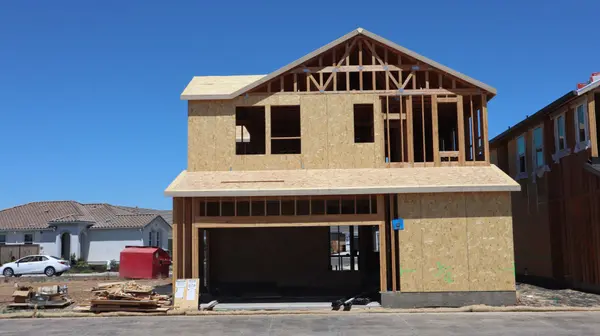
On the ground, that process is already translating into new product. A workforce housing village broke ground in Newberg in mid-2026, with homes expected to be ready to show by October and starting prices in the high $300,000s. That fills a gap in the entry-level tier that has been thin here for years.
Separately, Pahlisch Homes is preparing to open the first phase of Collina, part of a decades-long master plan for the Springbrook area. An economic analysis cited in connection with that project projected more than 2,100 new single-family homes will be needed in Newberg by 2041 just to keep pace with population growth.
That's a useful data point if you're wondering whether this is simply a temporary building boom or part of a longer trend. The development pipeline suggests Newberg will continue changing as the city works to accommodate additional residents.
Roads and city services haven't fully caught up with the growth Newberg has already seen, and residents notice it most around the Highway 99W corridor during commute hours. That's a real tradeoff worth weighing against the lifestyle upside. It's not necessarily a dealbreaker, but it is something to understand before deciding where you want to live.
For relocating buyers, more new construction means more entry points at different price tiers, not just resale inventory competing over the same handful of well-kept older homes.
What the Current Market Looks Like
According to Redfin data, the median sale price for a home in Newberg was $517,000 over the three months ending in July 2026, down about 1.5% from the same period a year earlier. Price per square foot told a different story, increasing 22.3% year over year to $326.
That difference matters when you're trying to understand what is actually happening in the market. Smaller, more efficient homes may have made up a larger share of recent sales, which can push the price per square foot higher even while the overall median sale price moves in the opposite direction.
Homes are moving fairly quickly. Redfin's data shows recently sold homes averaging around 35 days on market with roughly one offer on average. That's not the frantic multiple-offer environment of a few years ago, but it is still a market where well-priced homes don't necessarily sit for long.
New listings coming onto the market carried a median asking price of $613,000, with typical time on market closer to 52 days. That suggests sellers are testing higher prices than what's actually closing, while buyers may still have some room to negotiate, particularly with newer inventory.
None of this should be read against Portland or another North Willamette Valley city as a simple discount comparison. Newberg's numbers measure Newberg's market, and the same metrics can look very different in Sherwood, Wilsonville, or Canby.
If you're comparing those communities, look at each city's own data and, more importantly, what a typical week actually looks like living there. That's often more useful than lining up median prices from markets with different sizes, housing types, and lifestyles.
What Makes Newberg Different From Other Relocation Options?
Newberg's appeal is not simply that it sits within driving distance of Portland. The city has a distinct downtown, a university, a wine country setting, and a mix of established neighborhoods and new development.
For some buyers, being able to walk to dinner, coffee, local shops, or community events may be more important than having the shortest possible commute. For others, the appeal may be more about having access to farmland, vineyards, and a quieter setting while still being close enough to Portland for work or other activities.
That means the right Newberg neighborhood can depend heavily on what you want your everyday routine to look like. A home closer to downtown can offer a more walkable experience, while properties toward the edges of the city may provide a quieter setting or more space.
What This Means for You
If you're relocating to Newberg for the lifestyle, think about what your daily routine actually looks like. Do you want to walk to dinner and coffee, or would you rather have a quieter setting on the edge of town with more space and be comfortable driving when you need to go somewhere?
If you're watching the new construction pipeline, getting on builder interest lists early can help you stay informed. The workforce housing project and the Collina phase are examples of new-build opportunities that could create additional choices, particularly in price ranges where resale inventory has historically been thinner.
And if you're comparing Newberg with other North Willamette Valley towns, don't just stack up sale prices. Compare what a Tuesday evening actually looks like, whether that means a walkable downtown, university activity, wine country access, or a quieter residential setting.
That's the comparison that matters when you're choosing a place to live for more than just the purchase price. Newberg is changing, and understanding both the growth and the lifestyle can help relocating buyers decide whether the community fits what they're looking for.
Jennifer Schurter serves buyers, sellers, and investors throughout South Clackamas County and the North Willamette Valley — including Canby, Oregon City, Wilsonville, Aurora, Hubbard, Molalla, Woodburn, Newberg, Sherwood, Tualatin, West Linn, Lake Oswego, and the greater Portland metro south. Her goal is simple: to be the most knowledgeable, most responsive, and most genuinely helpful real estate agent in the area — every single time. Jennifer is a licensed Oregon real estate broker with Real Broker LLC.
Ready to talk through your next move? Schedule a time with Jennifer here. No pressure, no pitch — just a real conversation.
Categories
Recent Posts







“I see my job as a Real Estate Advisor is to educate consumers about the realities of the Real Estate market of today. If you're ready to learn more about what it could mean for you to buy, sell, or invest in Real Estate, let's connect!"